Here comes the alt text

Curbing Consumption

Curbing Consumption

Our waste tells a story of not just what we consume, but how we live our lives. Analysing our consumption habits can reveal our attitudes and behaviour patterns, and may present opportunities to alter them in a positive way. 


Through this project, I studied my daily consumption habits and proposed a sharing economy method to change them. The 'share box' can create a sustainable lifestyle and solve the problem of cosmetic waste.


Throughout this process, I employed tools such as Mind Maps, Activity Mapping, Affinity Mapping, a field diary, persona creation, and challenge framing for my research. After crafting a prototype and gathering feedback, I made subsequent refinements and enhancements.

Tool

Tool

Id Ps

Type

Type

UX design

Sector

Sector

Cosmetic Consumption

Client

Client

Personal work

The current consumption patterns globally are facing challenges, with excessive consumption placing evident strain on both the environment and society.
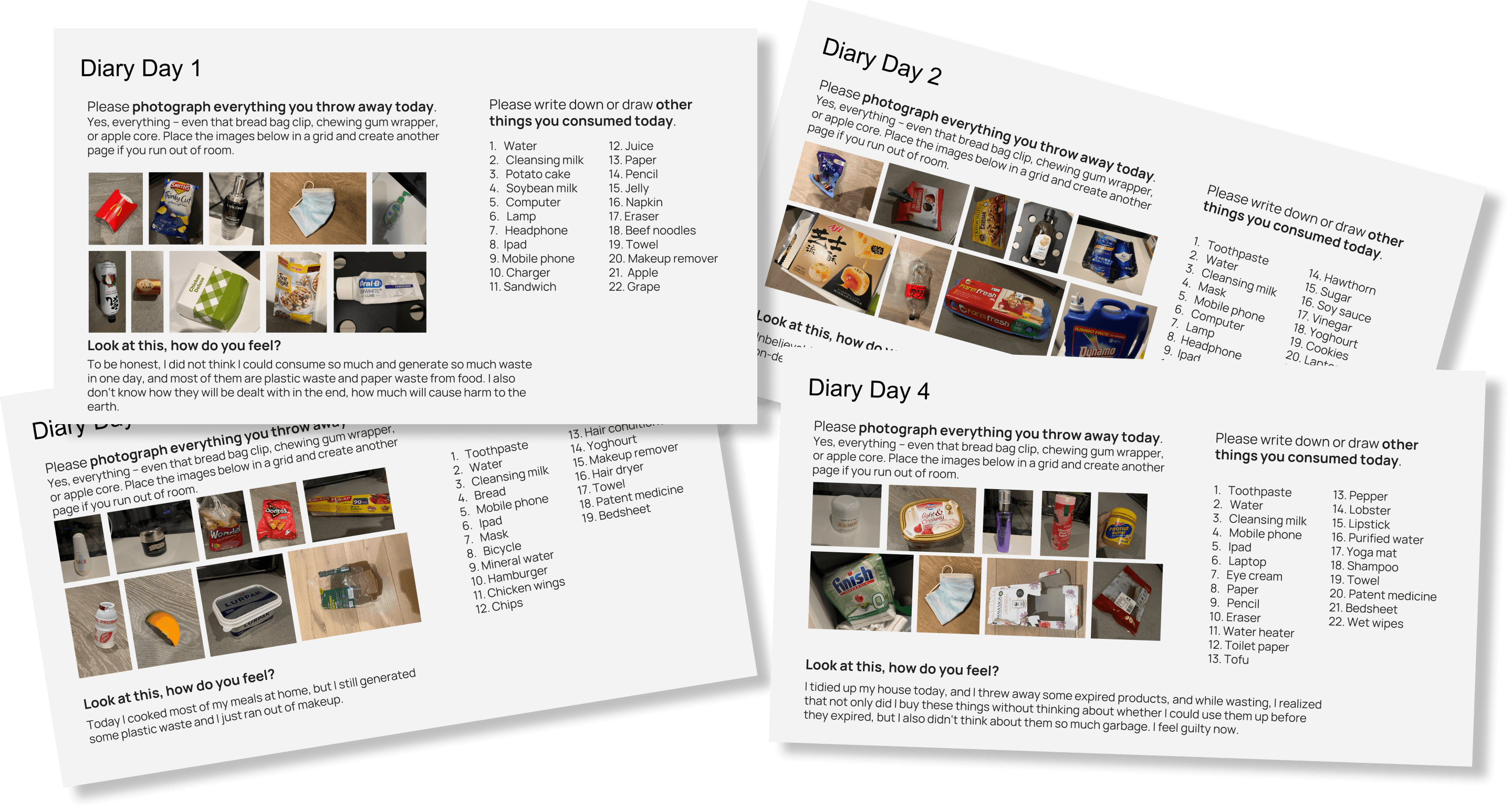
By designing products that promote sustainable development, I aim to encourage consumers to adopt more responsible and environmentally-friendly purchasing habits, contributing towards a more sustainable and prosperous future. I started by keeping a consumption diary to observe my own spending habits.

By designing products that promote sustainable development, I aim to encourage consumers to adopt more responsible and environmentally-friendly purchasing habits, contributing towards a more sustainable and prosperous future. I started by keeping a consumption diary to observe my own spending habits.

A consumption diary is a great way for self-awareness.

By documenting our purchasing behaviors and decisions daily, we can better understand our spending habits and preferences, identify potential overspending or impulse buying, and reflect on whether our consumption decisions genuinely meet our needs. Maintaining a consumption diary over the long term not only helps us establish healthier and more conscious spending patterns but also aids in better personal financial management."
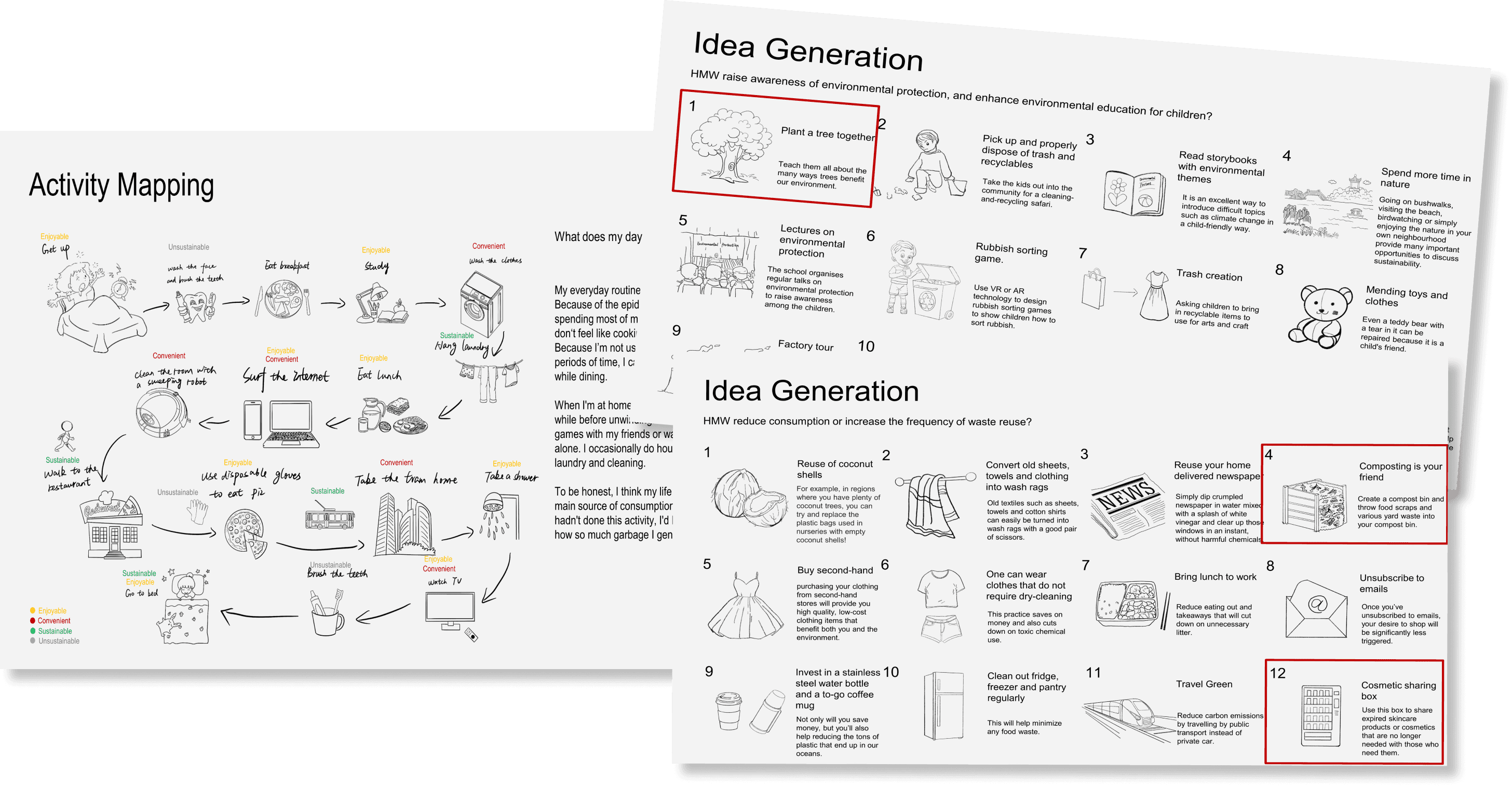
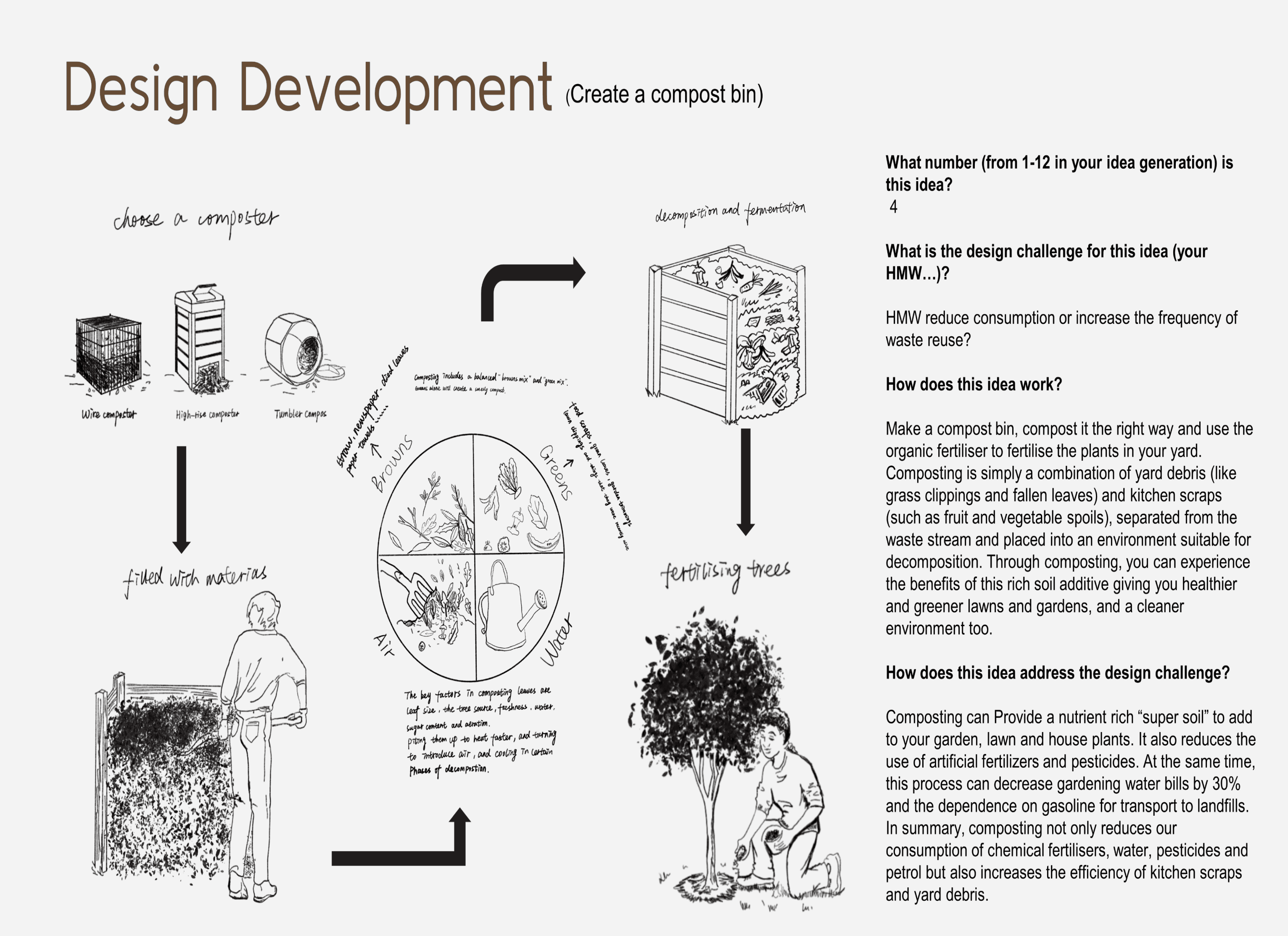
After documenting the activity mapping related to consumption and tracking my purchasing behaviors and decision-making processes for a day, I gained profound insights into my spending habits, the influence of touchpoints, and the emotional and psychological factors behind my decisions, as well as potential consumption patterns. Coupled with the consumption diary, I reflected on numerous ideas about curbing spending and promoting sustainable development, which I then captured in sketches.

After documenting the activity mapping related to consumption and tracking my purchasing behaviors and decision-making processes for a day, I gained profound insights into my spending habits, the influence of touchpoints, and the emotional and psychological factors behind my decisions, as well as potential consumption patterns. Coupled with the consumption diary, I reflected on numerous ideas about curbing spending and promoting sustainable development, which I then captured in sketches.

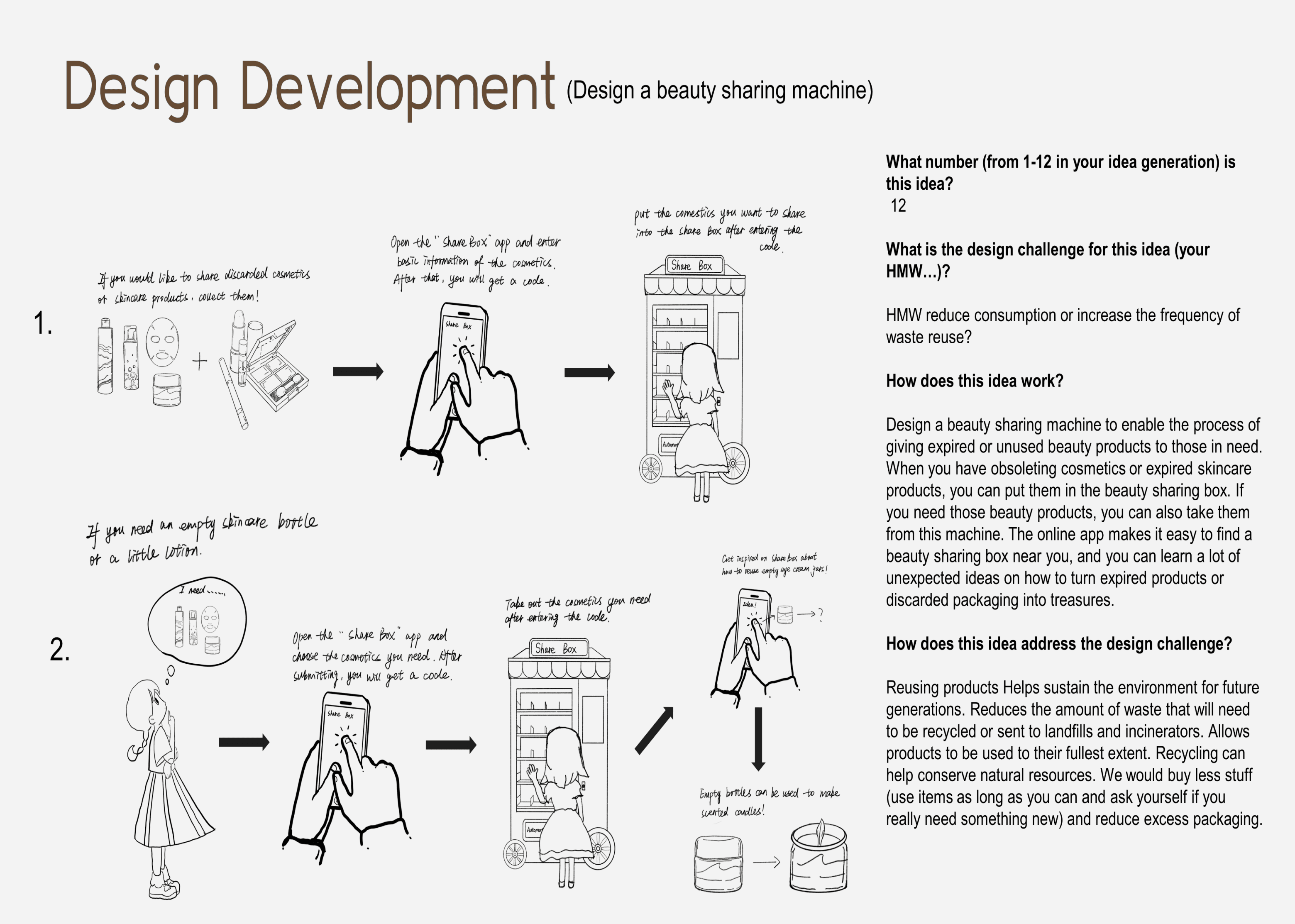
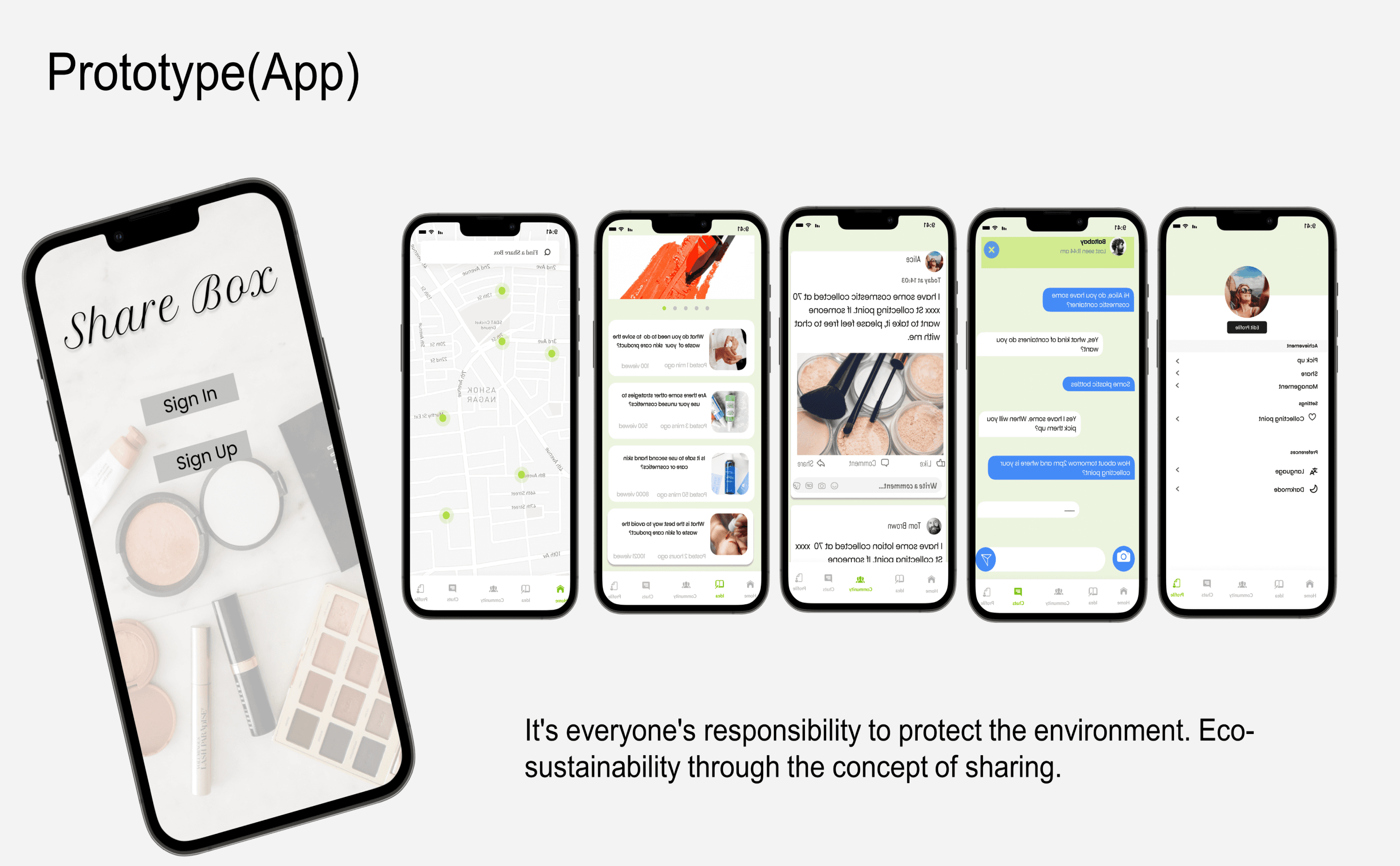
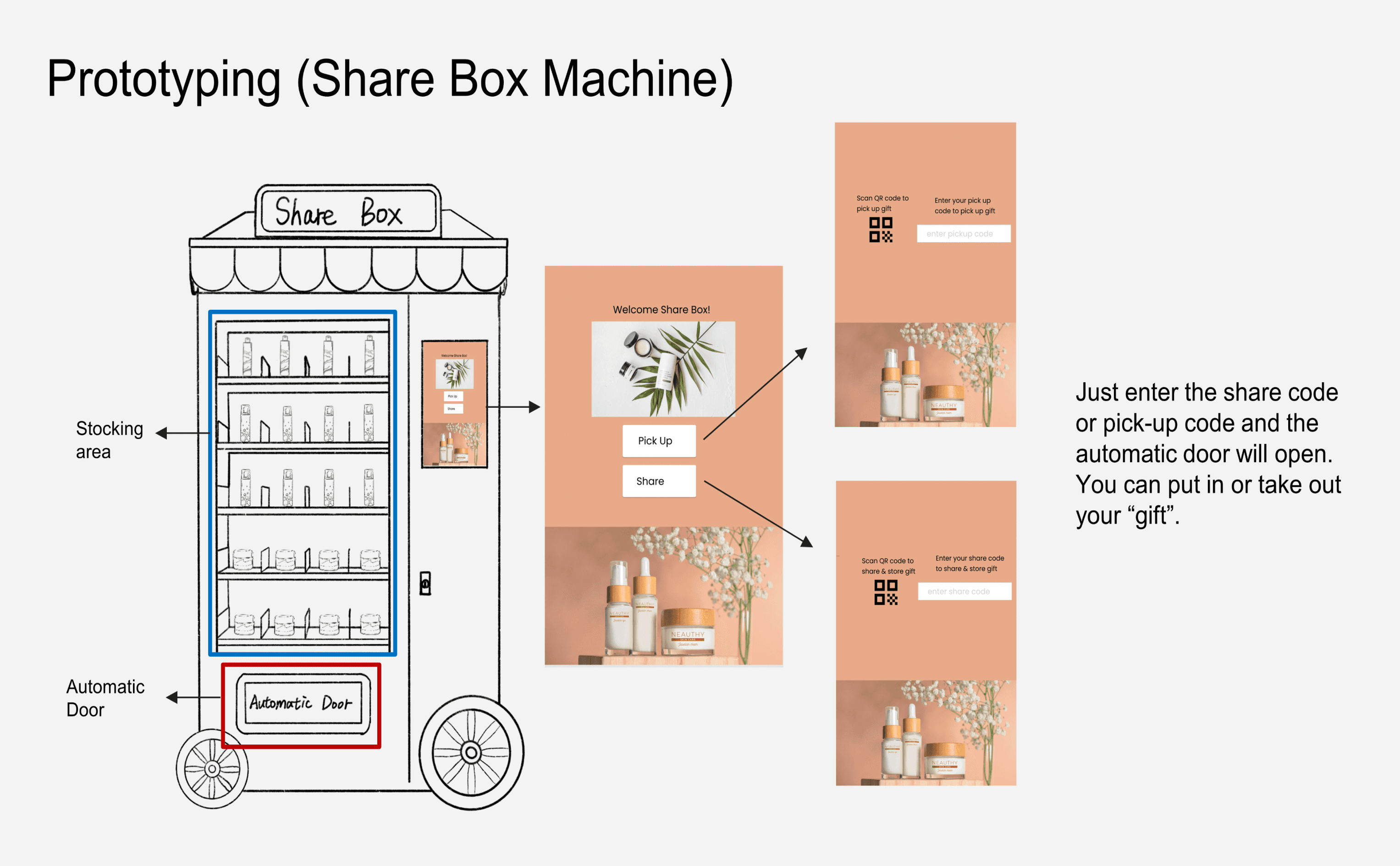
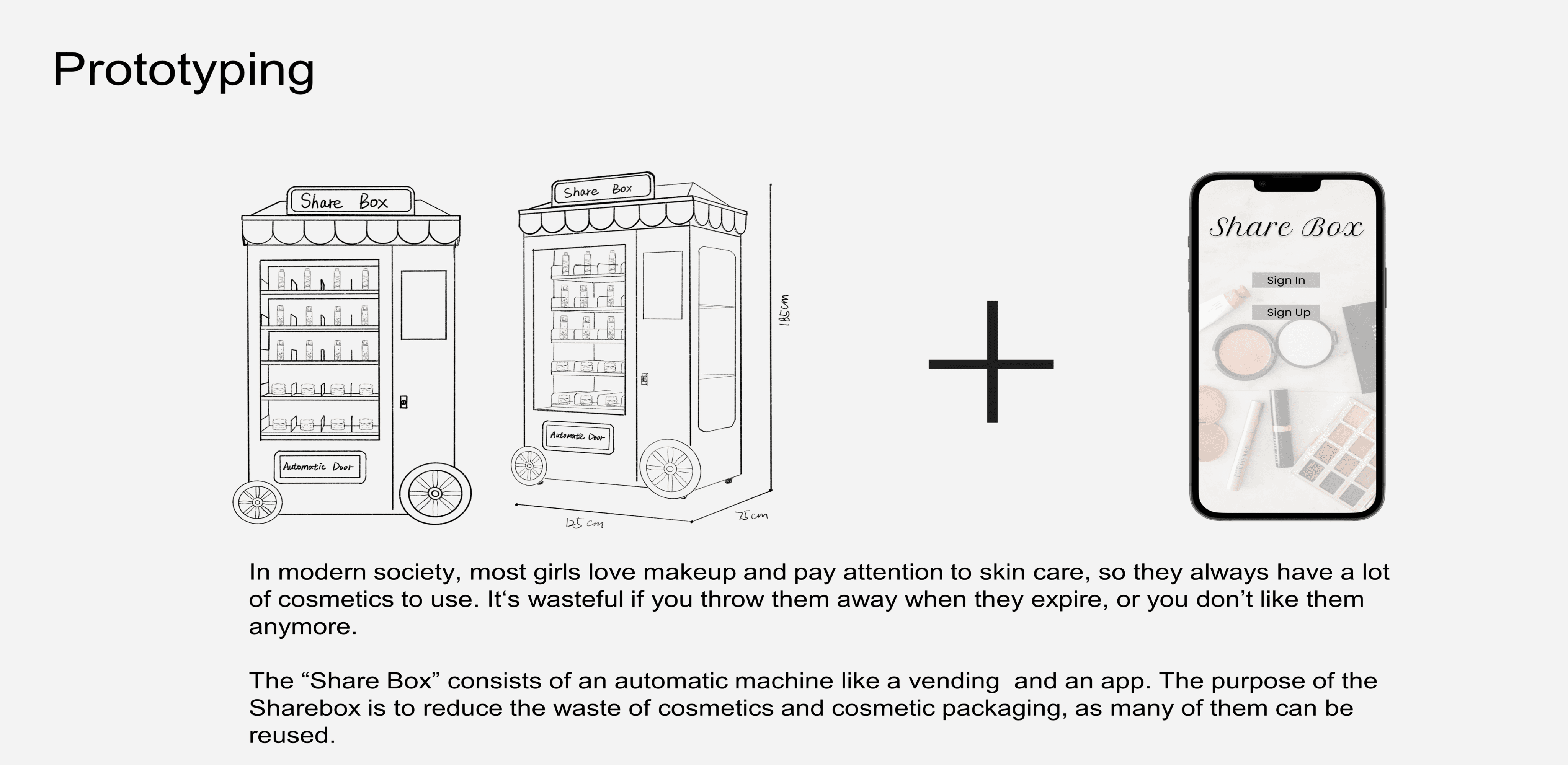
After generating multiple ideas and evolving design concepts, I finally settled on the 'Share Box' concept. In today's society, many young women have a passion for makeup and skincare, leading them to possess a plethora of cosmetic products. Discarding products simply because they're past their expiration or no longer in favor represents a significant waste. Following this concept, I designed an interface for a mobile application and a physical vending machine prototype. The 'Share Box' consists of an automated dispenser paired with its app. Its primary goal is to reduce wastage of cosmetics and their packaging, recognizing that many of these items can have a second life. In many instances, used cosmetic containers, whether plastic or glass, can be repurposed. For instance, a perfume bottle can make a stylish scented candle holder. Unexpired cosmetics can also find alternative uses; outdated toners can be effective for cleaning shoes, while facial cleansers can double as hand soaps, and so forth

After generating multiple ideas and evolving design concepts, I finally settled on the 'Share Box' concept. In today's society, many young women have a passion for makeup and skincare, leading them to possess a plethora of cosmetic products. Discarding products simply because they're past their expiration or no longer in favor represents a significant waste. Following this concept, I designed an interface for a mobile application and a physical vending machine prototype. The 'Share Box' consists of an automated dispenser paired with its app. Its primary goal is to reduce wastage of cosmetics and their packaging, recognizing that many of these items can have a second life. In many instances, used cosmetic containers, whether plastic or glass, can be repurposed. For instance, a perfume bottle can make a stylish scented candle holder. Unexpired cosmetics can also find alternative uses; outdated toners can be effective for cleaning shoes, while facial cleansers can double as hand soaps, and so forth

One key observation was the resilience of habits; aligning people's attitudes with new behaviors often proves to be the most challenging aspect
Ultimately, after gathering feedback, I refined the prototype. While some praised it as an innovative method of resource repurposing, others expressed concerns over the safety of reused cosmetics. Through this project, I gained insights into the diverse consumer mindsets and learned the intricacies of developing and testing an original proposal.

Ultimately, after gathering feedback, I refined the prototype. While some praised it as an innovative method of resource repurposing, others expressed concerns over the safety of reused cosmetics. Through this project, I gained insights into the diverse consumer mindsets and learned the intricacies of developing and testing an original proposal.

Credits

Credits

Design director

Design director

Jana

Jana

Photography

Photography

Kexin

Kexin